


 1300 778 628


How To Turn A Shed Into A Gym Shed You’ll Actually Use
A drive to the gym, a wait for the squat rack, then a membership fee that renews whether you show up or not. For a lot of people, that’s the real barrier to training consistently.
The idea of a home gym usually gets floated at some point, then shelved the moment cost, space and weatherproofing come into the conversation.
A gym shed changes that equation. Instead of clearing out a spare room or bolting a rack to a garage wall you still need for the car, a dedicated shed gives you a properly enclosed, secure space built for exactly one purpose.
Whether you’re converting an existing shed or planning a new one from scratch, this guide covers what actually goes into a gym shed that holds up to daily use: sizing, flooring, insulation, WA approvals, cost drivers and how to visualise the layout before a single sheet of steel goes up. Action Sheds, a Perth shed builder, builds every gym shed against those decisions first and the catalogue second.
Gym Sheds In Under A Minute
The best gym shed is sized for your equipment, insulated and powered for daily use, and checked against council rules before the design is locked in. Here’s what to look for:
- A power rack and bench needs roughly 4 to 5m², while a full multi-station setup can need 5 to 18m² depending on the machine
- Steel construction gives a wider clear span than timber, so equipment can go anywhere on the floor without working around support posts
- Flooring, insulation, ventilation and lighting are the features that turn a bare shed into a usable gym
- Small sheds may fall under a building permit exemption in WA, but this depends on floor area, height and your specific council
- Cost is driven mainly by shed size, site preparation and how much internal fit-out you want, not by the frame itself
- Action Sheds’ own 3D shed design tool lets you test a gym shed layout online before committing to a build
Table of Contents
- How Much Space Does A Gym Shed Actually Need
- Choosing The Right Shed For A Home Gym
- What Turns A Shed Into A Proper Gym Shed
- Do You Need Council Approval For A Gym Shed In WA
- What Drives Gym Shed Cost
- Design And Test Your Gym Shed Layout Before You Build
- Why Choose Action Sheds For Your Gym Shed
- Frequently Asked Questions
- Your Gym Shed Starts With A Plan
How Much Space Does A Gym Shed Actually Need
Equipment dictates size more than anything else. A single cardio machine and a set of dumbbells need very little room, while a multi-station gym or a full power rack setup needs enough clearance to move safely around it.
Use this as a starting point, then adjust for how much storage you want for plates, bands and accessories.
| Equipment | Approx. Space Needed |
|---|---|
| Exercise bike | 1m² |
| Rowing machine | 2m² |
| Treadmill | 2.8m² |
| Power rack and bench | 4 to 5m² |
| Free weights and storage | 2 to 4.5m² |
| Multi-station gym | 5 to 18m² |
As a rough guide, a shed around 4m x 3m gives you roughly 12m² of floor space, enough for a power rack, bench and a cardio machine with clearance to move. Step up to 6m x 4m and you’ve got room for a multi-station setup plus dedicated storage for plates and accessories.
Ceiling height matters just as much as floor area. Overhead press movements and pull-up bars need vertical clearance, so it’s worth confirming internal height before finalising a design rather than after.
Think about how the space will actually be used week to week, not just on day one. A single-car-sized shed suits one or two people training with a fairly fixed routine, while a double-bay footprint gives room to add equipment later, or to fit a second person training alongside you without either of you working around the other.
Choosing The Right Shed For A Home Gym
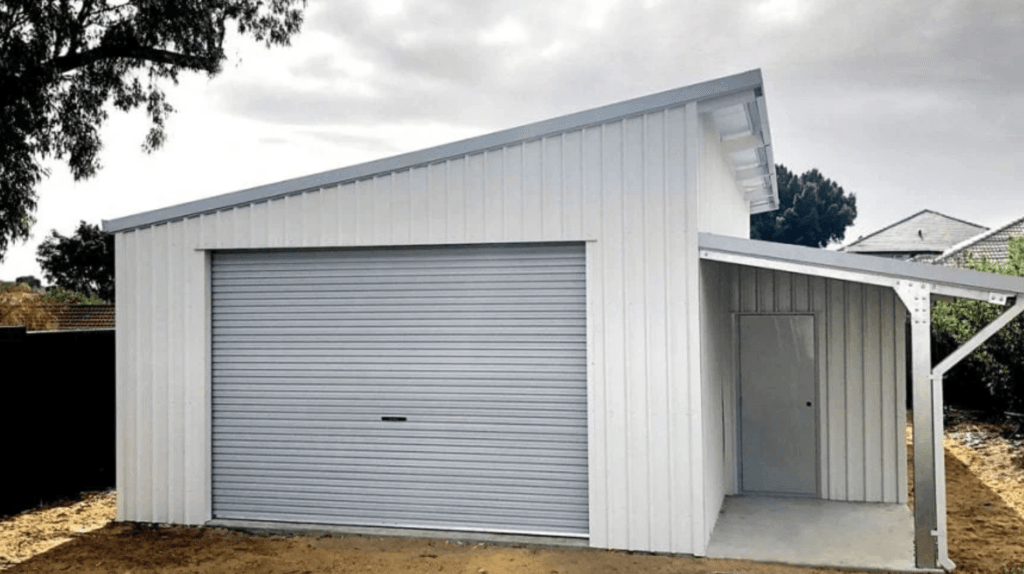
Every Action Sheds gym shed starts life as one of two things: a shed built specifically for training, or an existing shed repurposed once its old job, storing the trailer or housing the ute, is done. Both approaches work, and our Sheds Perth range covers either scenario.
Steel construction gives a wider clear span than timber framing, so a power rack or cable machine can sit anywhere on the floor without working around support posts. Most home gym builds come out of our residential sheds range or the workshop shed line, both engineered with that clear-span floor as standard.
That structural capacity isn’t only a residential feature. The same engineering behind our industrial sheds and commercial sheds, designed to carry heavy machinery loads, is what makes a steel gym shed floor solid enough for a fully loaded barbell without flexing.
If you’re starting from scratch, our shed builder tool (more on that below) lets you set the footprint and roof pitch before committing to a design.
Converting an existing shed is often the faster route if the structure is already sound and roughly the right size. It usually means less lead time than a new build, though it’s worth having the floor and framing checked first, since older sheds weren’t always built with heavy equipment in mind. A new purpose-built shed takes longer to plan but means every dimension, door position and floor spec is set with training in mind from day one.
What Turns A Shed Into A Proper Gym Shed
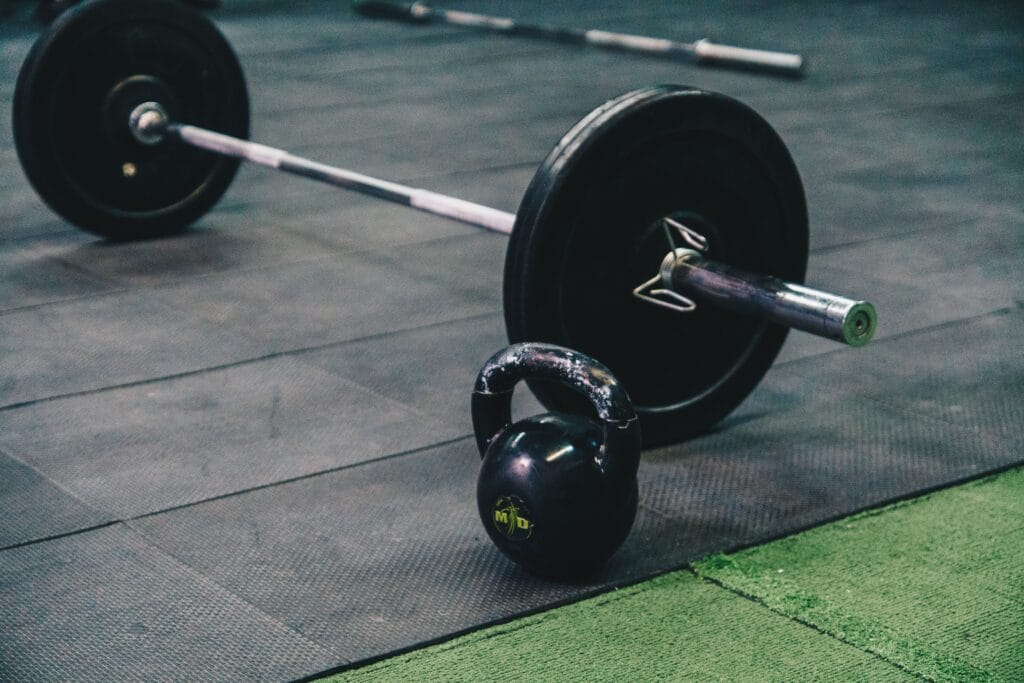
A shell alone isn’t a gym. These features are what separate a shed you can train in comfortably from one you’ll avoid after the first cold morning or hot afternoon.
Flooring And Foundation
A concrete slab is the standard foundation for a gym shed, giving you a level, load-bearing base that won’t shift under repeated impact from dropped weights or cardio machines. Our concrete slab guide covers thickness and preparation in more detail.
On top of the slab, rubber matting or interlocking gym tiles protect both the floor and your equipment, and they cut down on noise transferring through the structure.
Insulation And Climate Control
Perth summers push shed interiors well past comfortable training temperature without insulation, and uninsulated steel gets just as cold overnight in winter. Wall and roof insulation is the single biggest comfort upgrade you can make. Our shed insulation tips run through the options in more depth.
Roof insulation matters more than wall insulation in most Perth gym sheds, since a north-facing steel roof takes the brunt of summer heat. If you’re staging the fit-out and can only insulate one surface first, start overhead.
Airflow And Ventilation
Even a well-insulated shed needs airflow once you’re mid-session. A simple whirlybird vent or ridge vent handles passive airflow for lighter use, while a dedicated exhaust fan or split system copes better with sustained, high-intensity sessions.
Door and window placement also affects airflow more than people expect. A roller door on one wall and a smaller window or vent on the opposite wall creates a cross-breeze that a single opening can’t match.
Lighting And Power
Training safely means seeing what you’re doing, especially on compound lifts where form matters. Natural light from windows or a roller door helps, but dedicated LED lighting is what makes early morning or evening sessions workable year round. Our shed lighting tips cover placement and output.
Power points are worth planning for early. A treadmill, fan, speaker and phone charger all draw from the same circuit, so it’s easier to wire in extra outlets during the build than to retrofit them later.
Equipment Safety Clearances
Fixed equipment like a power rack or wall-mounted pull-up bar needs to be anchored into studs or the concrete slab itself, not just sitting loose against a wall. Leaving clear space around benches, racks and cardio machines also reduces the risk of a collision mid-set.
The exercise equipment safety standards published by Australia’s product safety regulator are a useful checklist to run through before your first session, covering everything from safety guards to manufacturer installation guidelines.
Do You Need Council Approval For A Gym Shed In WA?
Some small sheds fall under a building permit exemption based on floor area and height, but the threshold varies by council, zoning and whether the shed sits close to a boundary. What’s exempt in one local government area isn’t always exempt in the next.
Because a gym shed is typically larger than a garden storage shed, and often includes power and insulation, it’s worth checking with your council early rather than assuming an exemption applies. Our WA shed approvals guide breaks down what triggers a permit and what doesn’t.
Getting this sorted before the design is locked in also avoids costly changes later, particularly if your gym shed needs to sit closer to a boundary than a standard exemption allows.
Before contacting your council, have your proposed footprint, height and setbacks ready, along with confirmation of the zoning on your property. Councils can generally give a faster answer when the enquiry already has those details attached rather than a general “can I build a shed” question.
What Drives Gym Shed Cost
Three things drive gym shed cost more than anything else: overall size, how much site preparation your block needs, and how far you take the internal fit-out.
Size is the obvious one. A larger footprint means more steel, more roofing and a bigger slab. Site preparation is less obvious but often has a bigger impact, since a sloped or uneven block needs more earthworks before a slab can go down.
Fit-out is where cost varies most between projects. A basic shell with power and a slab costs less than the same shed finished with insulation, internal lining, extra lighting circuits and climate control. Deciding upfront which of these you want built in versus added on later keeps the project scope, and the final invoice, predictable from the start.
Roof span and wall height also play a part, since a taller, wider clear span needs heavier engineering than a standard single-car-sized structure. If you’re weighing up a larger footprint against staging the build in two phases, ask for both options priced separately so you can compare like for like before deciding.
Design And Test Your Gym Shed Layout Before You Build
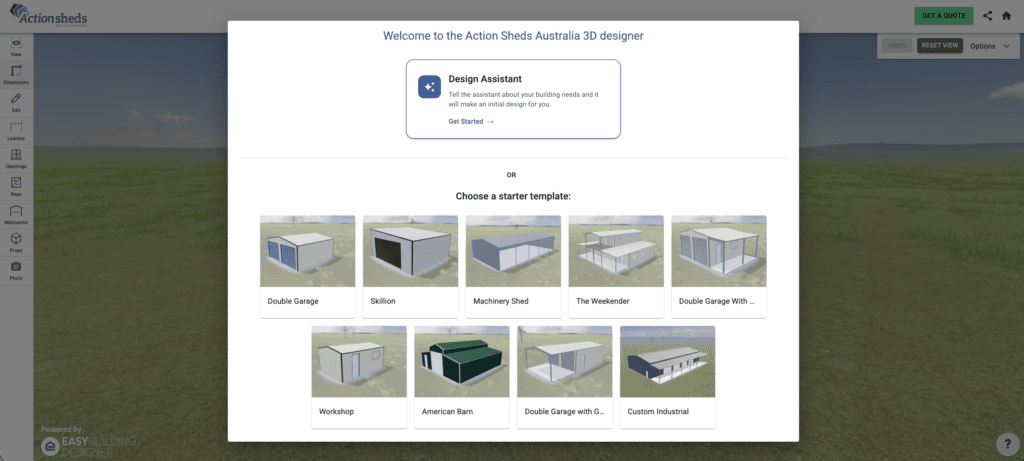
Working out whether a power rack, treadmill and floor mats will actually fit together is hard to picture from a floor plan alone. That’s exactly what our 3D shed design tool is built for.
Here’s how it helps when you’re planning a gym shed specifically:
- Set your footprint first. Enter the length, width and roof style you’re considering, then see the internal floor area rendered in 3D rather than as a flat measurement.
- Test equipment placement. Use the dimensions from the space guide above to sense-check whether a rack, bench and cardio machine actually fit with clearance to move around them.
- Compare configurations. Try a few different footprints or door positions before settling on one, since moving a roller door on screen costs nothing compared to moving it after the slab is poured.
- Check clearances against your gear. Cross-reference the layout against your must-have equipment list so nothing gets left without room once it’s delivered.
Working through the design online before committing means fewer surprises once construction starts, and a floor plan you’ve already tested against your actual equipment rather than guessed at.
Why Choose Action Sheds For Your Gym Shed
Action Sheds is a family run business that has supplied and built thousands of steel sheds across Australia, with more than 20 years of experience behind every design. That scale of work includes everything from domestic garages and workshops through to large scale mining sheds and farming structures, so a gym shed benefits from the same engineering standards applied to far heavier-duty builds.
Every project is designed and manufactured to withstand WA’s conditions specifically, not adapted from a generic template. That matters for a gym shed, where insulation, ventilation and floor loading all need to hold up to daily use rather than occasional storage.
We specialise in all steel shed types, which means the same team scoping your gym shed can also advise on how it fits alongside an existing garage, workshop or future extension to the property. Excellent customer service and quality workmanship underpin every build, from initial design through to handover.
As a Perth-based, family run business, we also understand the local conditions and council requirements a national supplier working from a template simply doesn’t. That local knowledge, paired with an Australia-wide supply network, is what lets us deliver a gym shed built for WA’s climate without the delays that come with a one-size-fits-all approach.
Frequently Asked Questions
Is Training Three Times A Week Too Much?
No, three sessions a week is a reasonable baseline for most adults and lines up with general public health advice. The recommended weekly exercise guidelines call for muscle-strengthening activity on at least two days a week, alongside broader physical activity most days.
For a gym shed specifically, three sessions a week is also a practical starting point because it gives you time to test how the space performs (temperature, lighting, noise) across different times of day before committing to a heavier routine.
What Is The 3-3-3 Rule In The Gym?
The 3-3-3 rule is a simple structure some trainers use for building a routine: three main exercises per session, three sets of each, and three training days a week. It’s aimed at people who want a straightforward, repeatable framework rather than a complex program.
Applied to a gym shed, it also works well as a way to plan your initial equipment list, since three compound movements typically only need a rack, a bench and a set of free weights to get started.
What Counts As Bad Gym Etiquette?
In a shared or public gym, bad etiquette usually means not re-racking weights, hogging equipment during rest periods, or skipping a wipe-down after a sweaty session. None of that changes the fact people generally expect basic courtesy if others are training alongside them.
A home gym shed removes most of that friction entirely. There’s no queue for the rack and no one waiting on the bench, which is one of the more understated advantages of training in your own space.
Is Spending Three Hours At The Gym Too Much?
For most training goals, a session that long usually reflects excessive rest between sets rather than genuinely productive work, and shorter, more focused sessions tend to deliver better results.
That said, a home gym shed removes the time pressure a commercial gym creates through opening hours or other members waiting on equipment. If a longer session genuinely suits your schedule or includes both training and mobility work, training in your own shed means it’s entirely your call.
Your Gym Shed Starts With A Plan
A gym shed only works if the fundamentals are right: enough space for the equipment you actually own, flooring that handles impact, insulation that makes it usable year round, and power for whatever you plug in. Get those right and the shed does its job every single day, not just on the days motivation is high.
If you’re ready to see what that looks like on your own block, try our 3D shed design tool to test a layout, or get in touch with the Action Sheds team to talk through sizing, approvals and fit-out for your gym shed.
Ready to plan your gym shed?


