


 1300 778 628


Shed Storage Ideas That Actually Maximise Your Space
A shed that’s meant to save you space can just as easily become the place where clutter goes to disappear. Tools get buried under boxes, shelving sags under weight it was never designed to hold, and within a year the same shed that promised extra storage feels smaller than before you built it.
Most shed storage ideas floating around online treat this as a shelving problem, when it’s usually a structural one. Steel wall cladding can’t be screwed into the same way as a timber shed, a mezzanine floor without a proper load rating is a safety risk rather than a shortcut, and a shed sized for “enough space” today rarely has room to grow.
This guide covers the shelving, zoning and organisation ideas you’d expect, along with the structural side of shed organisation that Sheds Perth builder Action Sheds Australia has been solving for homeowners, farmers and businesses across WA for more than 20 years.
Here’s Everything You Need to Know in Under a Minute
- Plan storage into your shed’s design, including size, bays and height, before you build rather than after
- Fix shelving to a shed’s structural girts and purlins, not to the cladding sheets themselves
- A mezzanine floor needs a proper load rating in kPa before you stack anything heavy on it
- Ventilation and moisture control stop stored tools and hardware from rusting
- Match your storage approach to your shed type, whether that’s a home garage, farm shed or industrial facility
- Clear containers, labelling and defined zones make everything faster to find
- Security features protect valuable stored items, not just the shed itself
Table of Contents
- Why Shed Storage Ideas Fail Before You Even Start Organising
- Plan Your Storage Layout Before You Build
- How to Fix Shelving to a Steel Shed Without Damaging the Cladding
- Clever Shelving and Wall Storage Ideas
- Add a Mezzanine Floor for Serious Extra Storage
- Keep Stored Items Dry and Rust-Free
- Storage Solutions by Shed Type
- Clear Containers Labelling and Zoning for Easy Access
- Securing Valuable Items in Shed Storage
- Why Action Sheds Is Built for Serious Storage
- Frequently Asked Questions
- Turn Your Shed Into Storage That Actually Works
Why Shed Storage Ideas Fail Before You Even Start Organising
According to a garage clutter survey of 1,000 people conducted by the Australia Institute, nearly half of respondents said their garage was too full to actually park a car in. Sheds follow the same pattern.
What starts as a dedicated storage space slowly fills with items that never got a proper spot, until the shed itself becomes the clutter problem rather than the solution to it.
Most advice on organising a shed jumps straight to shelving, hooks and bins, which is useful, but it skips the reason storage breaks down in the first place.
A shed built without enough height for a mezzanine, without bays sized for the equipment it needs to hold, or with walls that can’t safely carry hanging weight, will always struggle no matter how well you organise what’s inside it. Getting shed organisation right starts with the structure, not the contents.
Plan Your Storage Layout Before You Build

If you’re still in the planning stage for a new shed, this is the point where the biggest storage gains are made, and it costs nothing extra to think it through properly before construction starts.
Sizing Your Shed for Storage Not Just Enough Space
It’s tempting to size a shed for what you need to store right now. The problem is that storage needs grow. A young family’s garden tools and bikes today become a teenager’s project car and a home workshop a few years later.
Action Sheds designs every structure to the client’s requirements rather than a fixed catalogue, with dimension adjustments possible in fine increments, so it’s worth sizing generously and using our shed builder tool to test different span, length and height combinations against what you actually plan to store over the life of the shed rather than just this year.
Extra Bays Height and Roller Doors for Zoning
Extra bays and additional roller doors cost more upfront, but they turn a single open space into naturally zoned storage areas without a single shelf being installed.
A vehicle bay, a tool bay and a general storage bay, each with its own access point, keeps categories of items physically separated from the start. This matters even more for Industrial sheds and commercial sheds, where separate bays for stock, equipment and staff access are often a compliance requirement as much as a convenience.
How to Fix Shelving to a Steel Shed Without Damaging the Cladding
One of the most common mistakes with shed storage ideas is treating a steel shed like a timber one. Screwing directly into cladding sheets doesn’t give you a secure fixing point, and repeated attempts can compromise the weatherproofing of the sheet itself.
The fixing points that actually carry weight are the shed’s girts and purlins, the horizontal and roof-plane structural members that the cladding is screwed onto. Locating these before you mount anything heavier than a single hook means running a vertical timber cleat across the wall so it crosses each girt, then fixing your shelving or racking to the cleat rather than to the sheeting in between.
For lighter items, magnetic strips and small hooks fixed with appropriate self-tapping screws directly into the cladding ridges can work, but anything that needs to carry real weight, including power tools, paint tins or stacked boxes, should always tie back to the structural frame.
Clever Shelving and Wall Storage Ideas
Once shelving is fixed properly, the layout ideas that make the biggest difference are the same ones that work in any shed, adapted to make the most of a steel structure’s height and wall space.
Vertical Storage for Long-Handled Tools
Rakes, shovels, brooms and other long-handled tools take up disproportionate floor space when they’re leant against a wall or left in a corner.
Wall-mounted brackets or a slatted rack fixed to the girts keeps them upright, off the floor and easy to grab without knocking over everything else nearby. The same approach works for extension ladders and lengths of timber or pipe that don’t fit neatly on a shelf.
Adjustable and Modular Shelving Systems
Fixed shelving locks you into one configuration, which rarely suits every item you’ll ever store. Adjustable shelving lets you reconfigure gaps as your needs change, tall enough for a mower on the bottom shelf, tighter above for smaller items.
If your shed doubles as a garage, our guide on getting more from your garage space covers layout ideas specific to combining vehicle storage with everything else competing for the same floor area.
Add a Mezzanine Floor for Serious Extra Storage
When wall storage and shelving aren’t enough, a mezzanine floor is usually the next step. It doubles usable floor area without extending the shed’s footprint, which matters when block size or council setbacks limit how much you can build outward.
Our mezzanine floor guide covers how a mezzanine is designed and fitted into an existing or new shed structure.
The detail most storage guides skip is load rating. A mezzanine isn’t just a platform, it’s a structural element rated to carry a specific weight per square metre, and general industry guidance in this mezzanine load capacity guide puts light-duty storage around 100 to 200kg per square metre, workshop use around 200 to 300kg per square metre, and heavy-duty storage upward of 300kg per square metre.
Guessing at this rating and overloading a mezzanine is a genuine safety risk, so it needs to be specified correctly at the design stage rather than assumed after the fact. That load has to travel somewhere, which is why the foundation underneath matters just as much.
Our guide to properly laid concrete slabs explains what a slab needs to carry a mezzanine and heavy stored items without cracking or settling over time.
| Storage Use | Typical Load Rating |
|---|---|
| Light-duty storage | 100 to 200kg per square metre |
| Workshop use | 200 to 300kg per square metre |
| Heavy-duty storage | 300kg per square metre and above |
Keep Stored Items Dry and Rust-Free
Storage that gets damaged by moisture isn’t really storage, it’s just a slower way of losing the item. Steel sheds are excellent at keeping the weather out, but that same airtightness can trap humidity inside if ventilation isn’t considered.
Ventilation and Airflow
A combination of roof vents and lower wall vents creates natural airflow, letting warm, moist air escape through the roof while drawing cooler air in lower down.
This constant exchange stops humidity building up around stored tools and equipment, particularly through WA’s more humid coastal months, and it’s far more effective long term than relying on opening a roller door occasionally.
Moisture Control for Tools and Hardware
For smaller metal items like fasteners, hand tools and hardware, moisture-absorbing options such as silica gel packs or a small dehumidifier in an enclosed cabinet add another layer of protection on top of good ventilation.
Keeping these items elevated on shelving rather than sitting directly on a concrete floor also reduces their exposure to rising damp, particularly in the cooler months.
Storage Solutions by Shed Type
Shed organisation isn’t one size fits all. What works for a suburban backyard shed looks quite different from a farm machinery shed or a mining site facility, even though the underlying principles of zoning, fixing and moisture control stay the same.
Residential and Workshop Storage
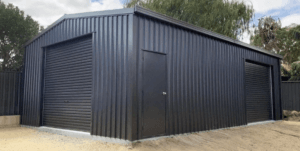
Our residential sheds range covers straightforward backyard storage through to fully lined and powered spaces used daily.
For projects that need dedicated bench space alongside storage, our custom workshops collection adds features like extra power points and wider door openings, and our guide to functional workshop layout walks through zoning a workshop so storage and working space don’t compete for the same square metres.
Where the priority is protecting a vehicle rather than tools, our garage designs can be built standalone or attached to an existing home.
Farm and Rural Storage
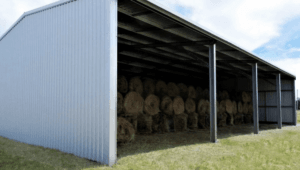
Farm storage carries different demands again, from machinery and feed through to chemicals that need to be kept separate from everything else. Our rural sheds range is designed around the reality of WA farming operations, where a single structure often needs to store equipment, produce and supplies across several seasons rather than just one use case.
Industrial Commercial and Mining Storage
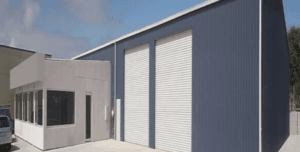
Businesses have their own storage compliance requirements on top of practical ones, from stock rotation through to restricted access for hazardous materials.
Our mining sheds work covers everything from maintenance workshops to full remote-site storage facilities, engineered for the loads and access patterns that industrial and mining storage actually demands, rather than a scaled-up version of a residential design.
Clear Containers Labelling and Zoning for Easy Access
Even with the right structure and shelving in place, storage still needs a system to stay organised day to day. Clear containers let you see what’s inside without opening every box, which matters most for small hardware, fasteners and anything you reach for regularly.
Labelling each shelf, bay or container by category, rather than relying on memory, keeps the system working even when someone else needs to find something.
Grouping items into defined zones, gardening, automotive, seasonal, general hardware, keeps related items together and stops overflow from one category creeping into another.
Colour-coded labels or coloured bins can make this even faster to scan at a glance, particularly in a larger shed where you’re not always looking at the whole space at once.
Securing Valuable Items in Shed Storage
A well-organised shed often means more valuable items are stored in one place, which makes security worth planning alongside the storage itself rather than as an afterthought.
Lockable cabinets for tools and equipment, motion-sensor lighting and solid door hardware all reduce the risk of theft, and our 10 shed security tips guide covers the specific measures worth prioritising for a shed that holds genuine value, from power tools to farm equipment.
Frequently Asked Questions
What’s the Maximum Weight a Shed Mezzanine Floor Can Hold?
It depends on how the mezzanine is engineered. Light-duty storage mezzanines are typically rated around 100 to 200kg per square metre, workshop-use mezzanines around 200 to 300kg per square metre, and heavy-duty storage mezzanines upward of 300kg per square metre.
The rating needs to be specified at the design stage based on what you actually plan to store, since overloading an under-rated mezzanine floor is a genuine structural risk rather than a minor issue.
Can I Attach Shelving to a Colorbond Shed Without Damaging It?
Yes, provided you fix into the shed’s structural girts and purlins rather than directly into the cladding sheets. Running a vertical cleat across the wall so it crosses each girt gives you a secure, reusable fixing line for shelving and racking.
Lighter items can use appropriate fasteners directly into the cladding, but anything carrying real weight should always tie back to the structural frame to avoid compromising the sheeting.
How Do I Stop Tools Rusting in a Steel Shed?
Good ventilation is the first line of defence, with roof and lower wall vents creating airflow that stops humidity building up inside the shed.
Beyond that, keeping tools elevated on shelving rather than on the floor, using moisture-absorbing products like silica gel in enclosed storage, and wiping down metal tools after use all reduce the moisture exposure that causes rust.
Do I Need Council Approval to Add a Mezzanine or Heavy Shelving?
In most cases, adding a mezzanine floor requires council approval and site-specific structural engineering, since it changes the load the shed’s frame and foundation need to carry. Requirements vary by council and by the size and use of the structure.
Heavy shelving fixed to the existing frame generally doesn’t require approval on its own, but it’s worth checking with your shed builder if the total stored weight is significant.
Storage Ideas That Actually Work With Action Sheds
Shed storage ideas only work long term when the shed itself is built to support them, from wall fixings that tie into the structural frame through to a mezzanine rated for what you’re actually going to stack on it.
Whether you’re organising an existing shed or planning a new one specifically for storage, getting the structure right first makes every shelving and zoning idea in this guide work the way it’s supposed to.
If you’re planning a new shed with serious storage in mind, the easiest next step is to design it online using our shed builder tool, or get in touch with our team to talk through size, bays and mezzanine options for your property.
Either way, you’ll be working with a family-run WA business that has been building steel sheds for more than 20 years.


