


 1300 778 628


Best Sheds in Perth Are Custom Engineered for Your Property
Searching for the best shed turns up hundreds of options, and most of them look identical on a catalogue page.
Colour swatches change, roof lines change, but the underlying question stays the same: which one will actually hold up on your block, in Perth’s wind and heat, for the use you have in mind.
Get that wrong and the cost shows up later. A shed sized for storage but pressed into service as a workshop runs out of ventilation and floor space within a year.
A shed engineered for a suburban block but installed on an exposed rural property can struggle in a serious wind event. The shed itself was never the problem. The mismatch was. There is no single best shed in Perth, because “best” depends on what the building has to do and where it has to stand.
What does hold constant is a small set of engineering and design decisions that separate a shed that lasts from one that does not. Action Sheds, a Perth shed builder, builds every shed against those decisions first and the catalogue second.
The Best Sheds in Under a Minute
The best shed for your property is the one engineered for your site conditions, not the one that looks best in a brochure. Here are the factors to look for:
- Wind rating, steel grade, and ShedSafe compliance matter more to longevity than colour or size
- Action Sheds builds across garage, workshop, farm, industrial, barn, stable, and custom residential categories, each engineered to the same standard
- Roof style (gable versus skillion) affects both cost and how the shed performs in Perth’s climate
- Council approval requirements in WA depend on size, height, and location, and vary by local government area
- A custom-engineered shed from a family-run, Perth-based builder costs more upfront than a generic kit but avoids the compromises that come with a one-size-fits-all structure
Table of Contents
What Actually Makes a Shed the Best Choice
Most shed comparisons start with size and price. Those matter, but they are the easy part. The decisions that actually determine whether a shed performs over decades happen before a single sheet of steel is ordered.
Steel Grade and Coating
Australian BlueScope steel with COLORBOND® steel coating is the industry benchmark for a reason. It is engineered specifically for Australian conditions, including UV exposure and coastal humidity, both of which apply across most of the Perth metro area.
Wind Rating for Your Specific Site
A shed’s wind rating is not a single number that applies everywhere. It depends on wind region, terrain category, and shielding from surrounding structures.
A shed engineered for a sheltered suburban block will not automatically hold up on an open rural property, and the reverse is also true. An over-engineered shed on a sheltered block is money spent on capacity you do not need.
ShedSafe Compliance
ShedSafe accreditation means a supplier’s engineering has been independently reviewed against the National Construction Code. It is a useful shorthand for whether a shed’s design has actually been checked, rather than assumed to be adequate.
Customisation That Matches Use, Not Just Appearance
A shed built for machinery storage needs different door widths, floor loading, and clearance than one built as a home office or a horse stable. The best shed for a given property is rarely a stock size. It is one shaped around what will actually happen inside it.
Material Thickness and Profile
Steel sheeting is specified by base metal thickness, and a thicker gauge holds up better against denting, hail impact, and general wear over decades of use.
ZINCALUME® steel is also worth understanding alongside COLORBOND®. It offers the same corrosion-resistant coating without the painted colour finish, and is a common choice for rural and industrial sheds where budget and function outweigh aesthetics.
A Design Process That Starts With a Site Visit, Not a Catalogue
The best sheds are not selected from a size chart. They come from a process that looks at soil type, terrain, existing structures, and how the space will actually be used before any dimensions are finalised.
Skipping this step is how sheds end up under-engineered for their site or oversized for their actual purpose.
Action Sheds has built thousands of steel sheds Australia wide from a Perth base, and applies the same engineering process regardless of size, from a modest backyard shed to a large-scale commercial build.
For a longer look at how custom design decisions play out in practice, see our breakdown of custom-designed sheds.
Action Sheds’ Top Picks by Category
There is no single best shed because there is no single use case. Here is how Action Sheds’ range breaks down by category, and what each one is built to handle.
Best Garage Sheds
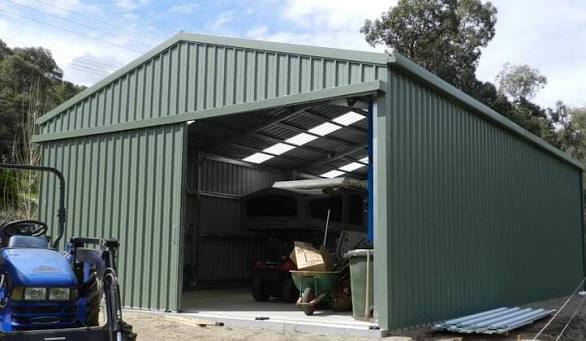
Action Sheds’ garages and carports in Perth are engineered with motorised roller door options, insulation, and skylight placement to suit both parking and secondary storage use.
Bay width and door height are worth locking down early if a boat, caravan, or larger 4WD is part of the plan, since retrofitting a wider opening later is rarely straightforward.
Best Workshop Sheds
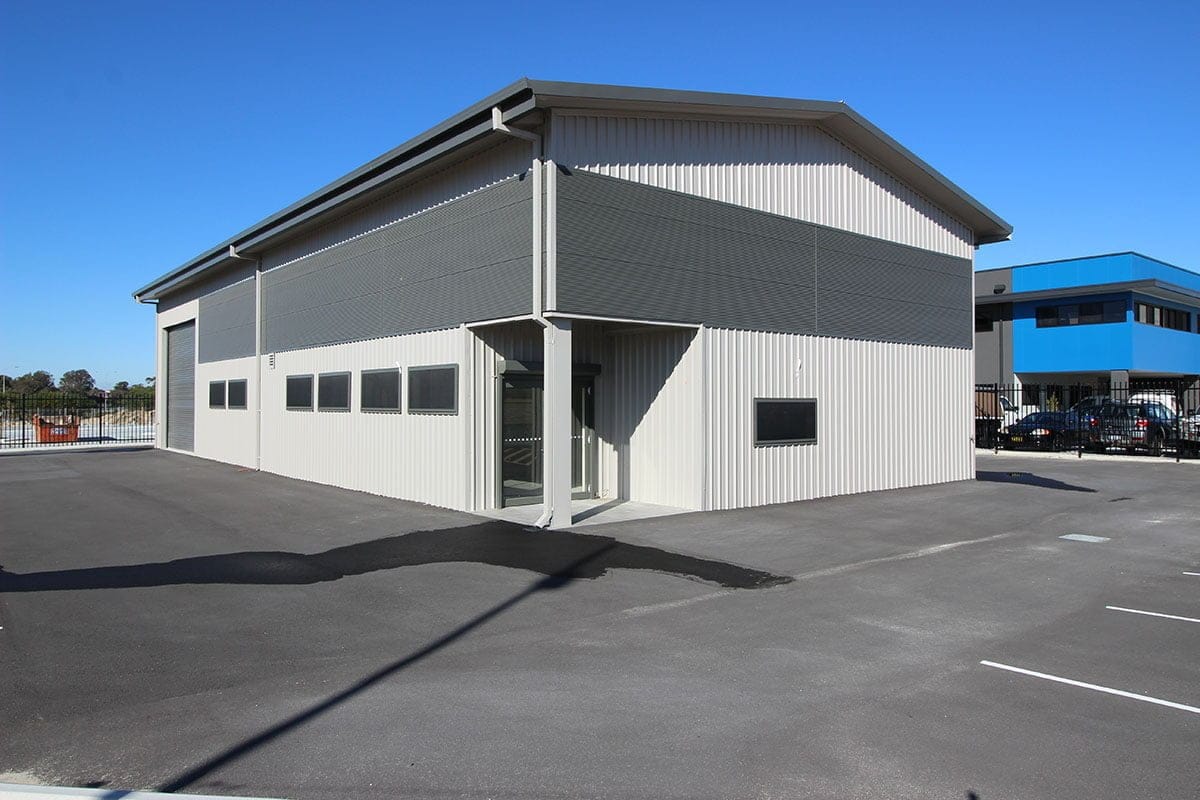
Workshop sheds carry different demands again: wider bays for machinery, higher floor loading, and ventilation for anyone spending hours inside.
Power and lighting layout also matters more here than in a standard storage shed, since bench and machinery placement usually dictates where circuits need to run. Action Sheds designs residential and commercial workshops around the equipment going into them, not a fixed template.
Best Farm and Rural Sheds
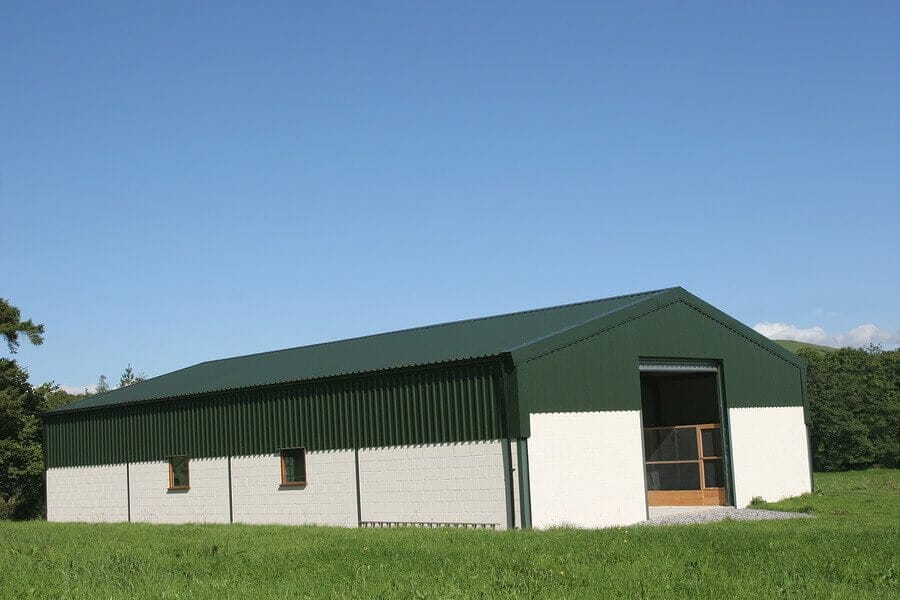
Farm sheds are judged on a different scale entirely: clear span width for machinery access, and enough resilience to handle an exposed rural wind region without the shelter of neighbouring buildings.
Open-front designs suit fast in-and-out access for tractors and headers, while fully enclosed sheds better protect stored produce, chemicals, or equipment from weather and vermin.
Our rural sheds range covers open-front machinery storage, hay sheds, and shearing sheds, each engineered for its specific agricultural use rather than adapted from a generic template.
Best Industrial and Commercial Sheds
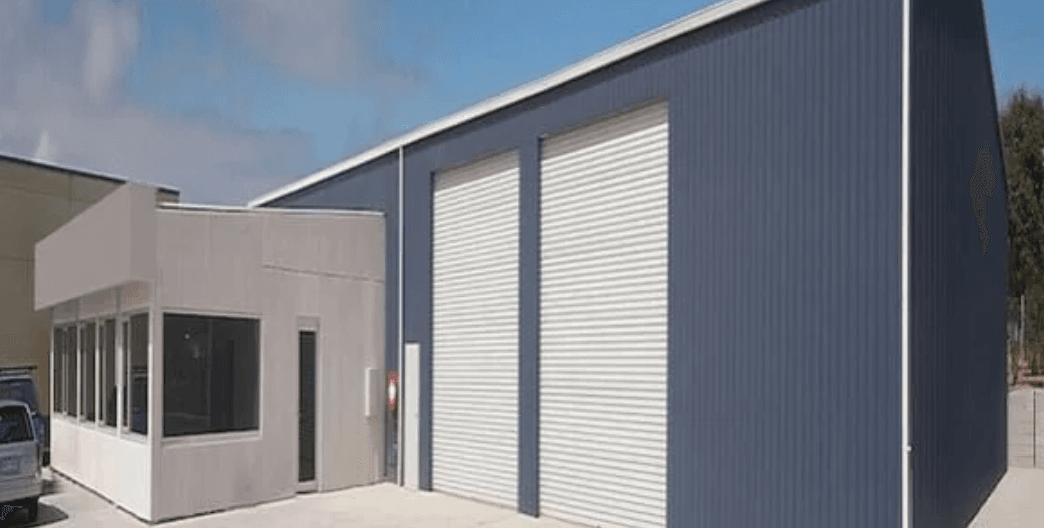
Industrial and commercial builds sit at the top end of scale and compliance requirements. Floor loading, clear span, and access for forklifts or heavy vehicles typically drive the design more than appearance.
Action Sheds delivers industrial sheds and commercial sheds for warehousing, manufacturing, and heavy vehicle workshops, along with a dedicated range of mining sheds built to the higher wind and structural loading standards that WA’s resources sector sites often require.
Best Barn Sheds and Stables
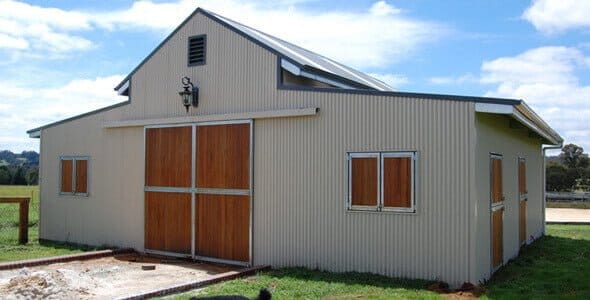
Barn-style buildings and equine structures need their own design logic: stall layout, ventilation for animal welfare, and durability against constant exposure.
Airflow is a particular priority in stable design. Poor ventilation contributes to respiratory issues in horses over time, so stall spacing and roof ventilation are treated as functional requirements rather than optional extras.
Action Sheds builds American and Australian-style barn sheds alongside purpose-built Durastall stables, engineered specifically for horse safety and long-term structural performance.
Best Custom and Residential Sheds

Not every shed fits a defined category, and that is where a genuinely custom process matters most. Home office conversions, studio spaces, and liveable shed configurations all draw on the same base engineering as a standard storage shed, but with added attention to insulation, natural light, and internal layout.
Action Sheds’ residential sheds range spans backyard storage through to liveable shed configurations, each designed around the property and the owner’s brief rather than a fixed floor plan.
Choosing the Right Roof Style and Design
Roof style affects cost, water runoff, and how a shed reads visually against your property, and it is worth deciding early since it influences the rest of the design.
Gable roofs remain the most common choice across Perth. The peaked profile sheds water efficiently and gives more usable internal height, which matters if a mezzanine floor is part of the plan.
Skillion roofs, with their single sloped line, suit a more modern aesthetic and work well where a lower profile is needed to meet council height restrictions or blend with an existing roofline.
Beyond the basic roof shape, there is a full second layer of design decisions: eave extensions, skylight placement, ventilation, and cladding profile among them. We cover these in detail in our guide to 15 shed roof styles, which is worth reading alongside this page if roofline is your main decision point.
Built for Perth and WA Conditions
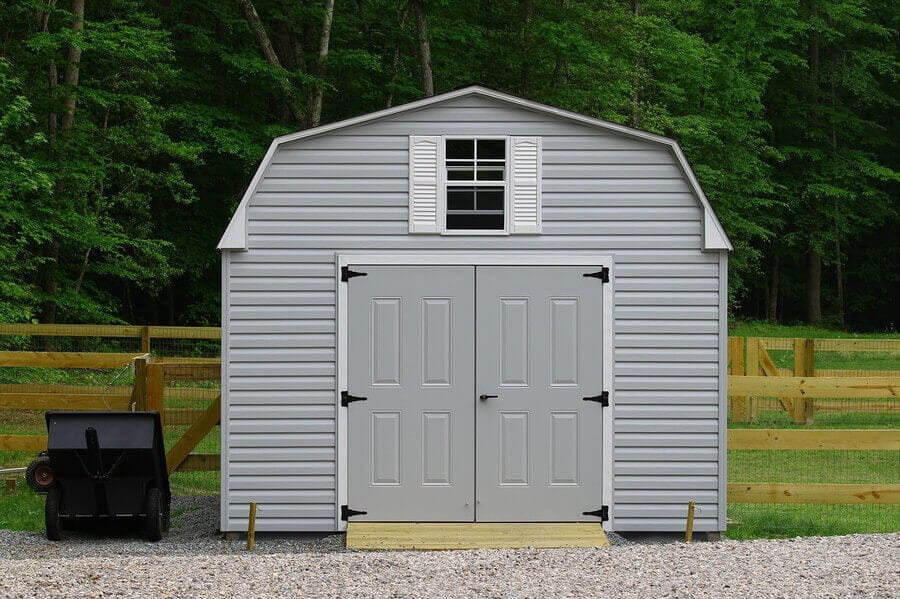
Perth and the broader WA market present a wider spread of conditions than most builders account for with a single design.
A block in Scarborough deals with coastal wind and salt exposure. A property in the Wheatbelt faces open-terrain wind loading with no shelter from surrounding structures. A block in the Perth Hills carries its own bushfire-related material and clearance considerations.
Action Sheds engineers to the specific wind region, terrain category, and site conditions for each build, rather than applying a single design across every location.
Metro blocks in established suburbs generally benefit from shielding provided by neighbouring homes and fences, which can reduce the wind loading a shed needs to resist. Rural and semi-rural properties rarely have that shelter, so the same shed footprint often needs a heavier gauge steel or additional bracing to meet the same safety margin.
This is also where council requirements come in. Most sheds over a certain size or height in WA need either a building permit, a planning permit, or both, and the exact rules differ between local government areas.
Setback distances from boundaries, maximum site coverage, and height limits are the most common points that catch owners out during the application process. Our guide to shed approvals in WA walks through what typically applies and when to check with your local council before committing to a design.
Why Action Sheds
Action Sheds is a family run business based in Perth, supplying and building steel sheds across WA and Australia wide. That matters for two practical reasons.
First, family ownership means the same standards apply whether the job is a small backyard shed or a large commercial build. There is no separate tier of quality reserved for bigger contracts.
Second, being Perth-based means the engineering team designs against WA conditions specifically, rather than adapting a design built for a different climate or market.
Action Sheds specialises across the full range of steel shed types, from large-scale industrial, commercial, and farming projects through to domestic workshops, garages, and carports. Every shed, regardless of size, goes through the same design and engineering process described above.
That range matters when a property does not fit neatly into one category. A rural block might need both a machinery shed and a stable. A growing business might need a warehouse today and a second commercial shed in a few years.
Working with a builder who covers residential, rural, and commercial categories under one roof means the same design standards and the same point of contact carry across every stage of that growth, rather than starting the sourcing process over each time.
Frequently Asked Questions
What Size Shed Do I Need?
Shed size depends on current use plus reasonable future need, and most owners underestimate the second part. For a garage or workshop, measure the largest vehicle or piece of equipment you will store, then add clearance for movement around it.
For farm or industrial sheds, machinery access and turning circles typically drive the dimensions more than storage volume alone. Action Sheds’ design team can talk through sizing against your specific use case before you commit to a floor plan.
Do I Need Council Approval for a Shed in WA?
In most cases, yes, though the exact requirement depends on the shed’s size, height, and your local government area. Some smaller structures fall under exempt development rules, while larger or taller sheds typically need a building permit and sometimes a planning permit as well.
See our full breakdown of shed approvals in WA for what applies to different shed sizes and locations.
How Much Does a Custom Shed Cost in Perth?
Cost depends on size, steel grade, roof style, and any additional features like insulation, mezzanine floors, or custom door configurations.
A custom-engineered shed costs more upfront than a generic off-the-shelf kit, but the difference reflects site-specific engineering and compliance rather than markup. For a detailed breakdown of what drives shed pricing in Perth, see our guide to Perth shed prices.
How Long Does a Custom Shed Take to Build?
Timeframes vary with shed size, current demand, and council approval timelines, which are often the longest single variable.
A straightforward residential shed typically moves faster through design and construction than a large commercial or industrial build with more complex engineering and compliance requirements. Your Action Sheds consultant can give a realistic timeframe once the design and site details are confirmed.
What’s the Difference Between a Kit Shed and a Custom Shed?
A kit shed is built to a fixed set of standard dimensions and specifications, which can suit straightforward storage needs on a typical block.
A custom shed is engineered from the ground up around your specific site conditions, intended use, and any non-standard requirements: extra bay width, unusual roof pitch, or a mezzanine floor among them. The trade-off is upfront cost against fit. A custom build costs more to design but avoids paying for capacity you do not need or compromising on capacity you do.
Getting Your Best Shed Built Right the First Time
The easiest way to start turning these design ideas into a real plan is to design your shed online using our 3D tool, or get in touch with our team directly to talk through size, use and site requirements.
Either way, you’ll be working with a family-run WA business that has been building steel shed designs for more than 20 years.


